
Siamang Gibbons

Call of the Canopy
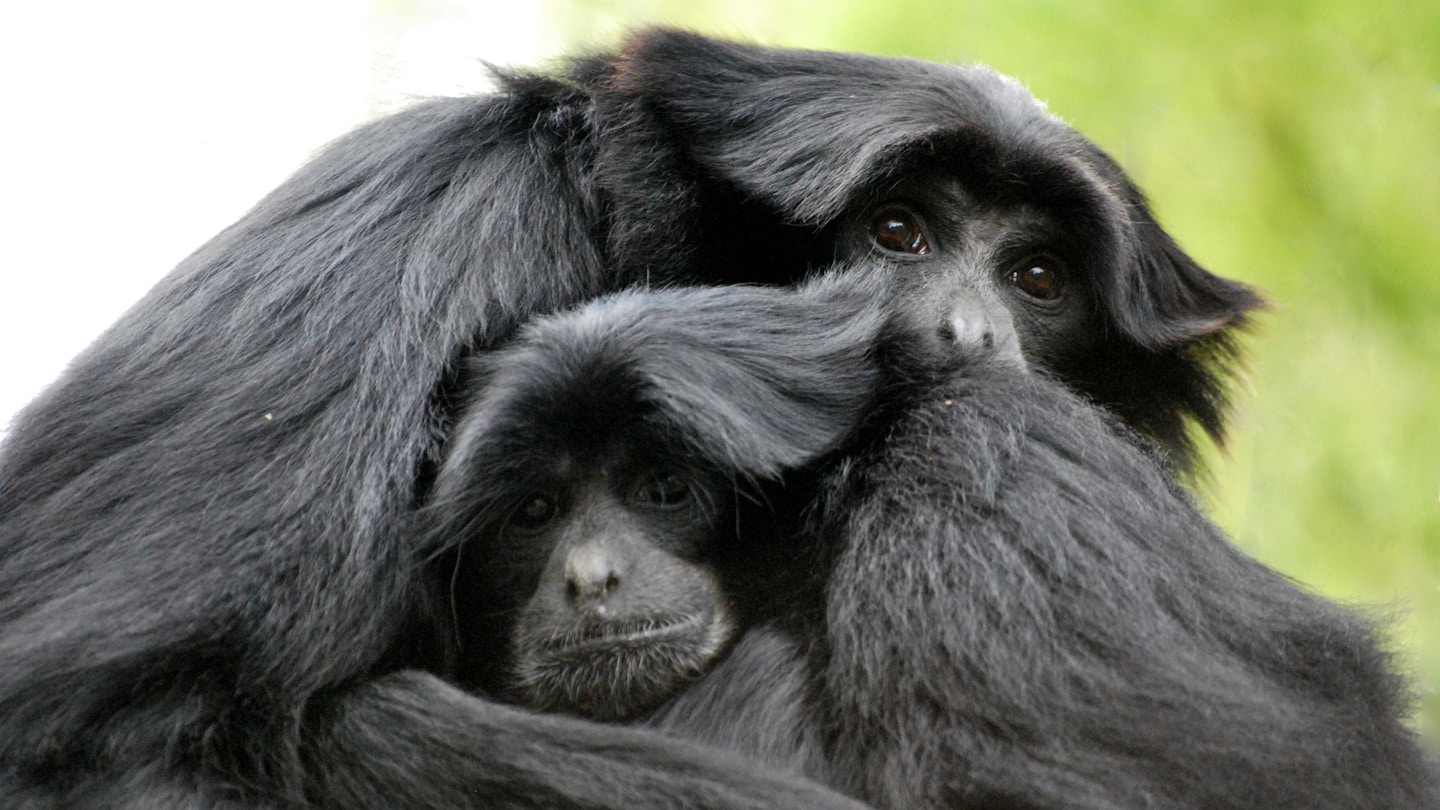
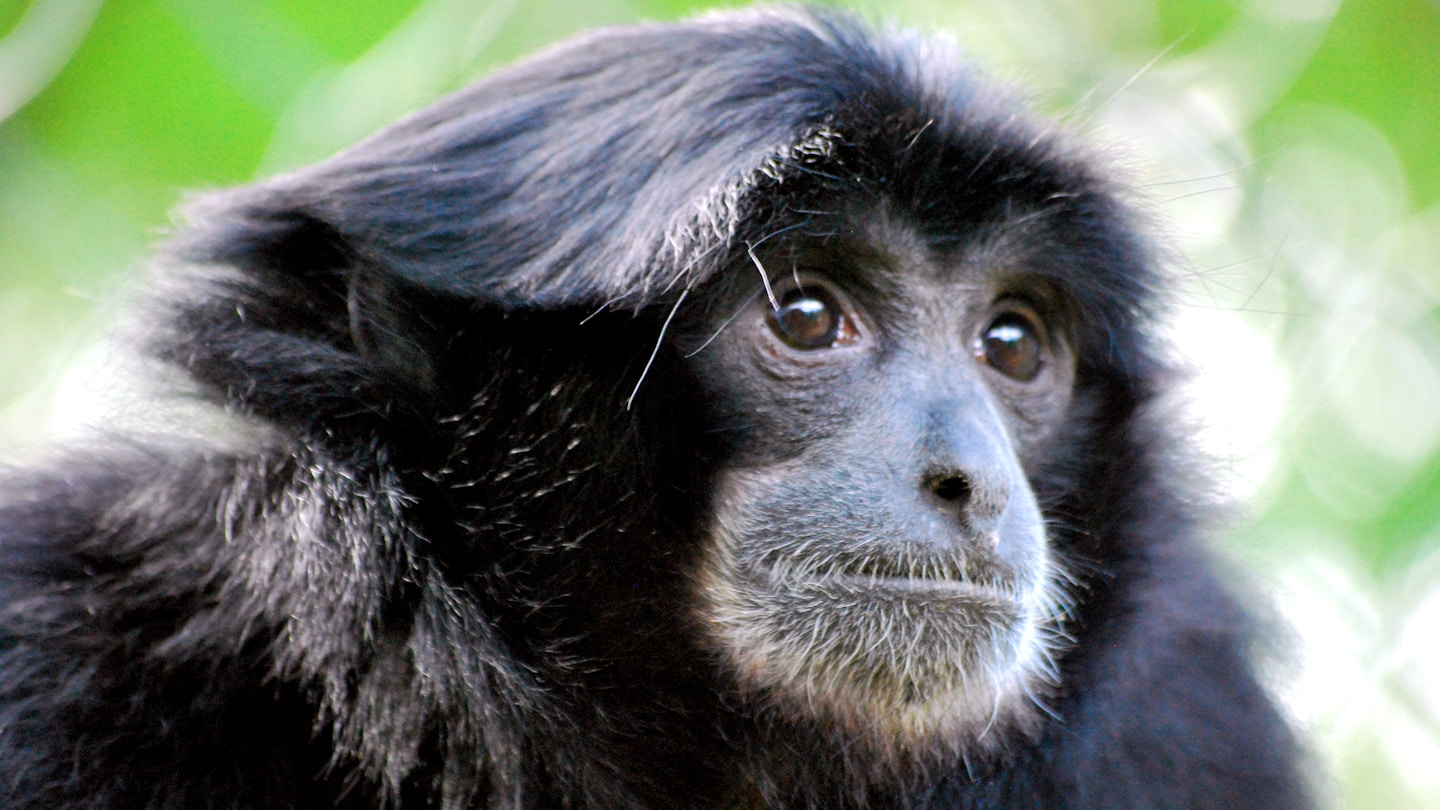
The siamang is the largest of the gibbons, known for its haunting calls and strong family bonds.
Here at Willowbank, Bujong, Sue, and Mali thrive together in their home.
In the wild, deforestation in Southeast Asia puts them at risk, making conservation more important than ever.
Siamang Gibbon Facts
South East Asia
Siamangs are found in the rainforests of Sumatra and the Malay Peninsula. They inhabit tropical forests where tall trees and dense canopy provide food, shelter, and pathways for their acrobatic lifestyle.
Rainforests
Living in tropical and subtropical rainforests, Siamangs prefer tall, continuous canopy. They spend most of their time in the treetops, moving through the forest swinging from branch to branch and using the dense foliage for shelter and protection.
Frugivore
Siamangs are primarily frugivores, eating mostly fruits, but they also consume leaves, flowers, and occasionally insects. Their varied diet supports their energy needs for swinging, climbing, and vocalising throughout the forest.
Social and Vocal
Siamangs are social and active during the day, living in close family groups. They swing through the treetops, forage, groom, and communicate with loud calls. These calls help them stay connected and protect their territory.
90-100cm
Siamangs are the largest gibbons, with adults measuring about 90–100 cm in length (including their long arms) and weighing 8–14 kg.
25-30years
Siamangs can live for 25–30 years in the wild, with some individuals reaching up to 35 years in protected or captive environments.
Endangered
Classified as Endangered, Siamang populations are threatened by habitat loss, deforestation, and hunting.
Exotic Area
You will often hear them before you spot them, come and join our Siamangs in the Exotic section of the Reserve.

More animals
Visit Us
We’re open daily from 9.30am to 5pm - rain or shine. The only exception? Christmas Day, when we take a well earned break.
Book Now